Workout tracker for iOS
The workout tracker that knows your next lift.
Log today’s sets and the double progression engine writes next session’s weights and reps — no guessing, no spreadsheet math.
See your next lift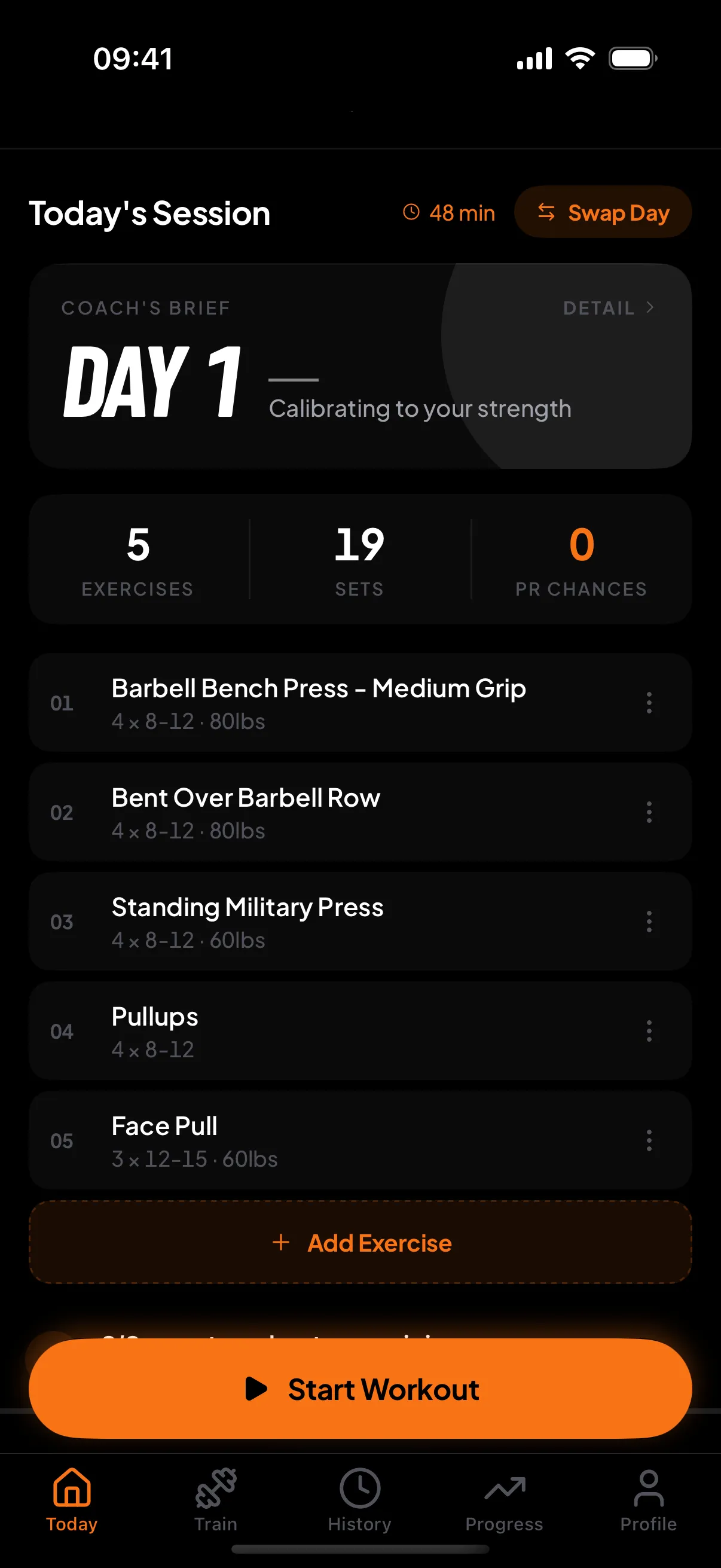
Strength Score
612
Advanced
0–999 · bench, squat, deadlift, press, row
Your best sets become an estimated one-rep max, each lift is weighed against your bodyweight, and the big five — bench, squat, deadlift, overhead press, row — roll up into one score from 0 to 999. Log a workout and it moves the same day.
The climb runs Foundation, Novice, Intermediate, Advanced, Elite. No streaks, no badges — the score only moves when the bar does, so a plateau shows up in the number before it shows up anywhere else.
The formula is published, limits included — how the Strength Score works.
Progressive overload
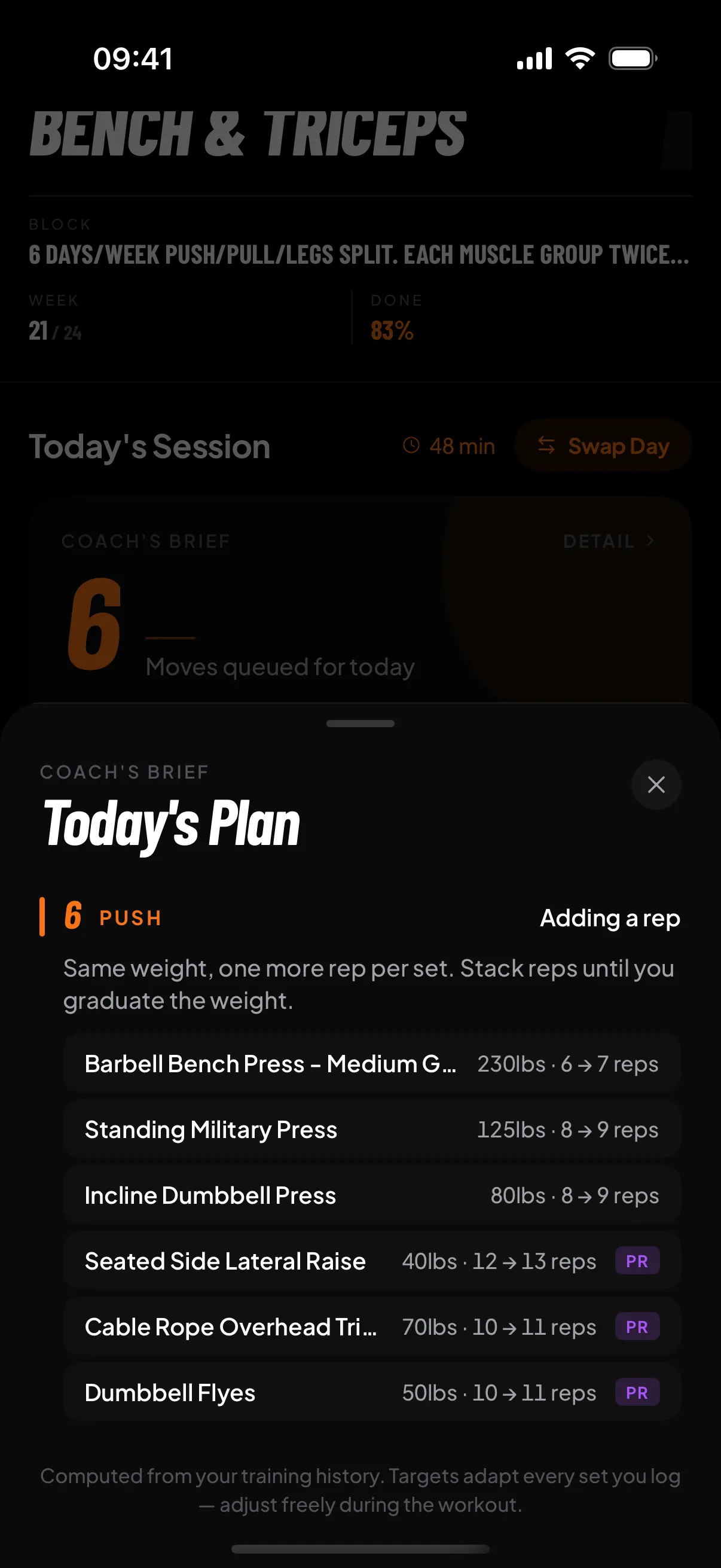
Hit the top of the range, and the weight moves itself.
Finish every set at the top of your rep range and next session’s bar is heavier. That’s double progression — RepStack just enforces it.
- Reps before weight. Work your 8s toward 12s before the load changes.
- Earned increases. Every set at the top of the range triggers the bump, and your rep target resets.
- Automatic deload. Stall, and it cuts 10% so you can climb past the plateau instead of grinding into it.
Underneath, every set updates your e1RM through a 3-formula average — Epley, Brzycki, Lombardi — so a rep PR counts even when the bar weight doesn’t change.
Read the double-progression ruleProgram import
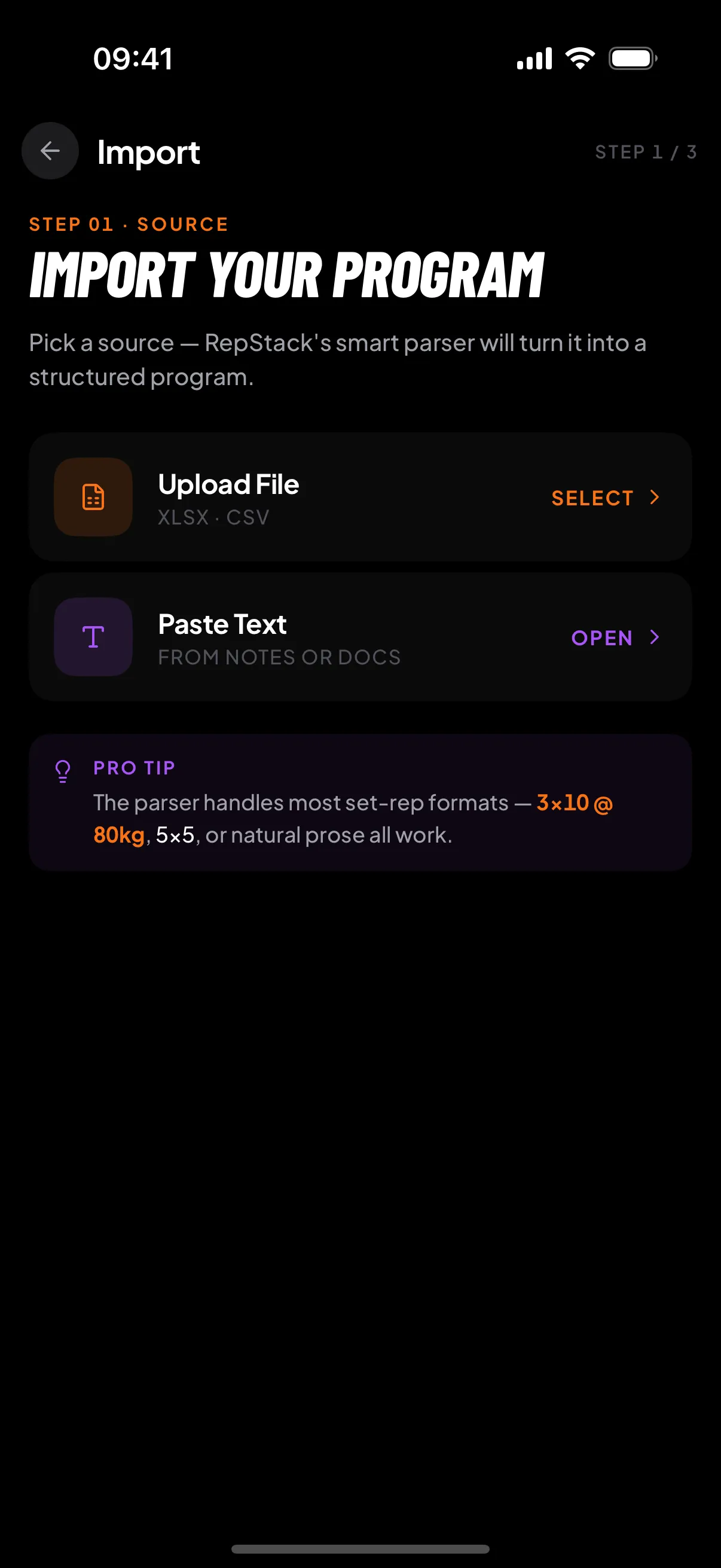
Bring any plan. It becomes a program.
That spreadsheet from your coach? Paste it in. RepStack turns plain text or an XLSX into a structured program — days, exercises, sets, rep ranges — ready to run with progression attached.
Upload the XLSX or CSV directly, or paste plain text — multi-week programs come through with every set scheme intact.
Free on the App Store
Your next session is already decided.
Download RepStack, log one workout, and see where you stand on the 0–999 scale.
Get your Strength ScoreiOS · offline-first · optional iCloud sync